| Quantity | 100µg |
| Price (USD) | $375 |
| Immunogen | Native Ferret IgM |
| Clonality | Monoclonal |
| Clone | FTGM-3E11 |
| Host | Mouse IgG1 |
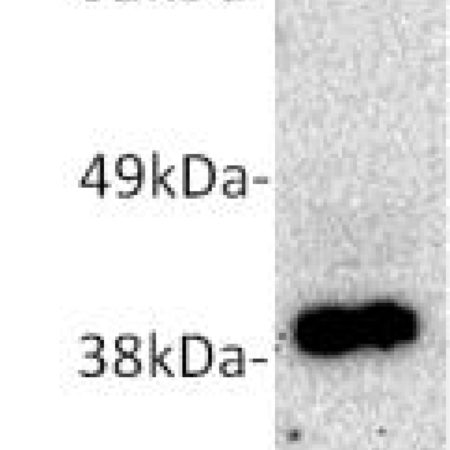
| Applications | ELISA capture, WB |
| Target | IgM |
| Reactivity | Ferret |
| Conjugate/Tag/Label | Unconjugated |
| Formulation | Lyophilized from PBS, trehalose |
| Purity | Protein G purified |
| Product Storage | 2 years at -20°C to -80°C as supplied. 1 month at 4°C after reconstitution with preservative. 1 year at -20°C to -80°C after reconstitution. |
| Packaging | Lyophilized Vial |
| Shipment Type | Ambient |
| Shipping Carrier | FedEx Overnight |
Product Description
Immunoglobulin M (IgM) is the first antibody produced in response to a new infection. It circulates mainly in the blood and is especially effective at quickly binding and clumping pathogens due to its pentamer structure. Clinically, IgM is often used as a marker of recent or acute infection, before longer-term antibodies like IgG take over. IgM autoantibodies can contribute to conditions like rheumatoid arthritis (e.g., rheumatoid factor is often IgM). Abnormal IgM production is a hallmark of Waldenström macroglobulinemia, leading to thickened blood. Low or absent IgM can be seen in rare disorders like selective IgM deficiency, increasing susceptibility to infections.
Sourced from mouse monoclonal IgG1 with reactivity in ferrets. Protein G purified from hybridoma cell culture supernatant. Applications include ELISA testing. Arrives in a Lyophilized Vial shipped overnight by FedEx.
For Research Use Only.
Storage & Reconstitution
- Lyophilized from PBS with Trehalose to keep for 2 years as supplied.
- Reconstitute in 100μL ddH20 to 1 mg/mL, store for 1 month at 4°C after reconstitution with preservative.
- For long-term storage, store for up to 1 year at -20°C to -80°C after reconstitution.
- Expires 2 years from the date of receipt.
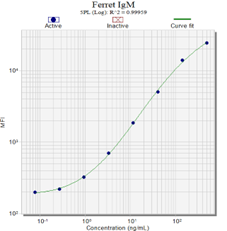
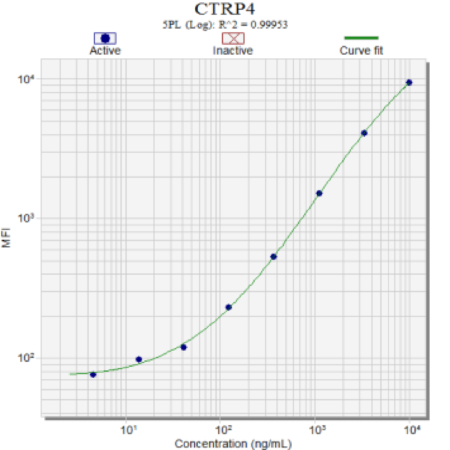
Ferret IgM Luminex Assay
- Capture: Ferret IgM mAb (Cat #M2081)
- Detection: Ferret Ig mAb (Cat #M2082b)
- Antigen: Purified Ferret IgM
| Applications | Western Blot, ELISA Testing |
|---|---|
| Reactivity |